What Will This Generation Be Known For?

Jesus asks a question in this week's Gospel that is as unsettling today as it was two thousand years ago:
"To what will I compare this generation?" (Matthew 11:16)
It's one of those moments when Jesus stops telling stories and starts asking questions. And questions have a way of making us uncomfortable. It is easy to listen to Jesus' words. It is much harder to examine our own lives in light of them.
Jesus continues:
"It is like children sitting in the marketplace and calling to one another, 'We played the flute for you, and you did not dance; we wailed, and you did not mourn.'"
It is as though Jesus is saying, I have spoken. I have invited. I have called. But no one is really listening.
As I reflected on these words over the Fourth of July weekend, I couldn't help but wonder whether they describe our own moment in history.
If Jesus sat down with us today—perhaps over a cup of coffee or, more fittingly, around a shared table—and asked, "To what will I compare this generation?" what would our answer be?
I'm not talking about Millennials, Gen Z, or Baby Boomers. I'm talking about all of us together. The collective "we." The people shaping this moment in history.
And if I'm honest, I'm a little afraid of the answer.
Our generation possesses extraordinary gifts. We have accumulated more knowledge than previous generations could have imagined. We have incredible technological power. We can communicate across the globe in seconds. We have the capacity to grow enough food, treat diseases that once devastated entire populations, and connect communities across continents.
Yet with all of this abundance, suffering remains everywhere.
Around the world, millions endure hunger, violence, and diseases that could often be prevented or treated if resources were shared more equitably.
Closer to home, families face impossible decisions every day. Food costs more. Housing costs more. Utilities cost more. Gas costs more. Even simply existing has become increasingly expensive.
Many people lie awake at night asking heartbreaking questions:
- Do I buy groceries or fill the gas tank?
- Do I pay the utility bill or finally schedule that doctor's appointment?
- Can I afford one small moment of joy, or should I save every penny because I don't know what tomorrow will bring?
These are not abstract questions. They are the questions our neighbors ask every day. And if we're honest, many of us have asked them too.
So I find myself wondering: with so much wealth and so much capability, why is there still so much suffering?
Jesus understood this kind of world.
The Roman Empire concentrated wealth and power in the hands of a few while ordinary people struggled beneath crushing economic burdens. Heavy taxation enriched the powerful while families wondered how they would survive. Systems often valued profit over people.
That context makes Jesus' words sound less like anger and more like heartbreak.
"We played the flute, and you did not dance. We wailed, and you did not mourn."
It's the disappointment of a parent who longs to see their child choose what is good.
Jesus came proclaiming good news for the poor, freedom for the oppressed, healing for the broken, and hope for the weary. He revealed a kingdom built not on wealth or power but on mercy, justice, compassion, and community.
And still, so many refused to hear him.
That question still echoes today.
What will define this generation?
Will we be remembered for what we accumulated?
Or will we be remembered for how we loved?
Thankfully, Jesus does not leave us with only difficult questions. Immediately after challenging the crowds, he offers one of the most beautiful invitations in all of Scripture:
"Come to me, all you who are weary and are carrying heavy burdens, and I will give you rest."
Notice what Jesus does not say.
He does not say, "Figure it out yourself."
He does not say, "Work harder."
He does not say, "Carry more."
He simply says, "Come."
Jesus knows we are tired.
He knows the grief, anxiety, uncertainty, and exhaustion that so many people carry.
Then he says something remarkable:
"Take my yoke upon you."
Without understanding the context, it can sound as though Jesus is giving us another burden to carry. But a yoke was a farming tool placed across two oxen so they could pull together. Its purpose was not to make the work harder but to distribute the weight. The burden was shared.
That changes everything.
Jesus is not handing us another burden. He is stepping into the harness beside us.
He is saying, You do not have to carry this alone.
Does that make discipleship easy?
Not at all.
Loving our neighbors is not easy.
Standing with those on the margins is not easy.
Seeking justice is not easy.
Building communities where every person is welcomed, valued, and loved is not easy.
But it is possible because Christ carries the weight with us.
I have seen that truth lived out in our own community. Week after week I watch people prepare meals, welcome strangers, serve quietly, and care for neighbors without seeking recognition. Many serve here and then continue serving elsewhere throughout the week.
That is the Gospel made visible.
Not because any one of us believes we can save the world.
But because we trust that Christ is already at work, and we choose to walk alongside him.
Perhaps that is what this generation can become.
Not a generation remembered for its wealth.
Not a generation remembered for its power.
But a generation remembered because, when Christ invited us to dance, we joined in.
When Christ called us to mourn with those who mourn, we showed up.
When Christ invited us to shoulder the burdens of our neighbors, we refused to let them carry those burdens alone.
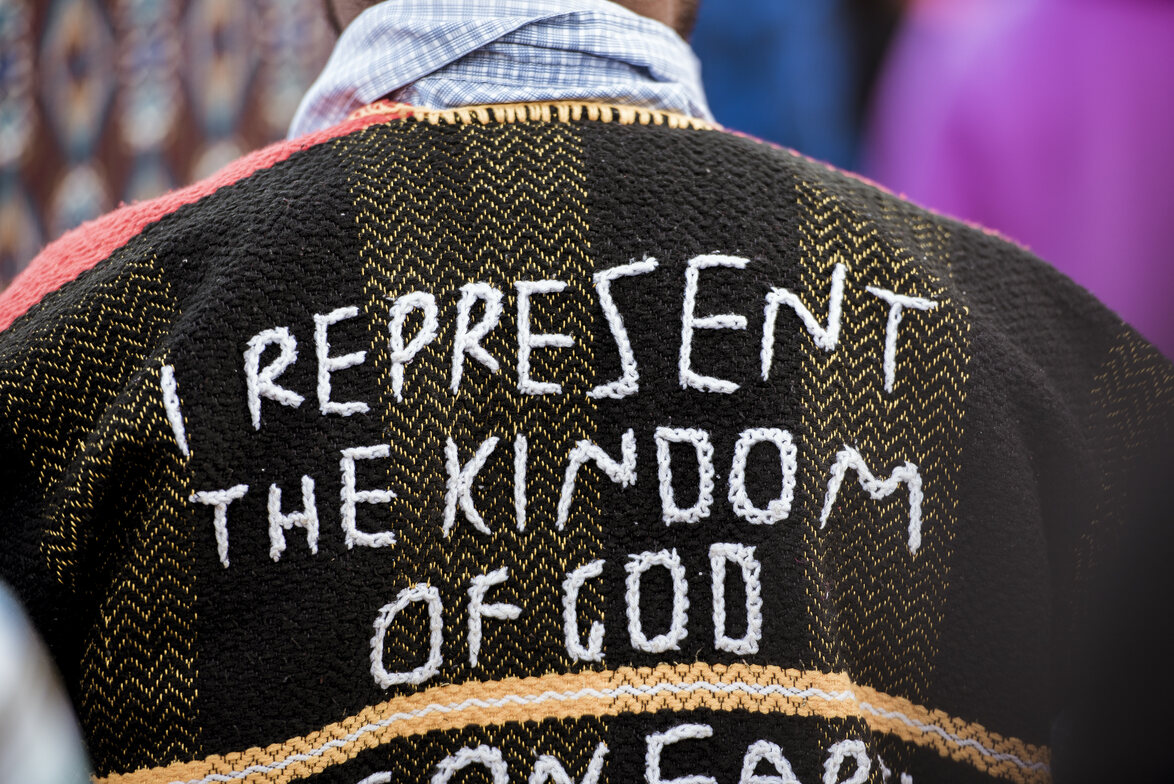
That is the Kingdom of God.
And thanks be to God, Christ is still walking beside us—offering rest to the weary, carrying the weight with us, and inviting us, every single day, to help build that kingdom together.